 Steel
SteelWhy are self-cleaning screens a smart choice for quarry screening?
Self-cleaning screens eliminate the 30-40% throughput drop caused by material blinding in quarries by utilizing independent wire oscillation to break the surface tension of moist fines. Field data from 60 European aggregate plants in 2025 demonstrated that these screens maintain a 95% effective open area even when processing limestone with 12% moisture content. By facilitating 1.2mm of lateral wire movement, they prevent near-size stones from pegging, reducing recirculating loads by 20% and adding approximately 160 hours of annual production time previously lost to manual cleaning cycles.
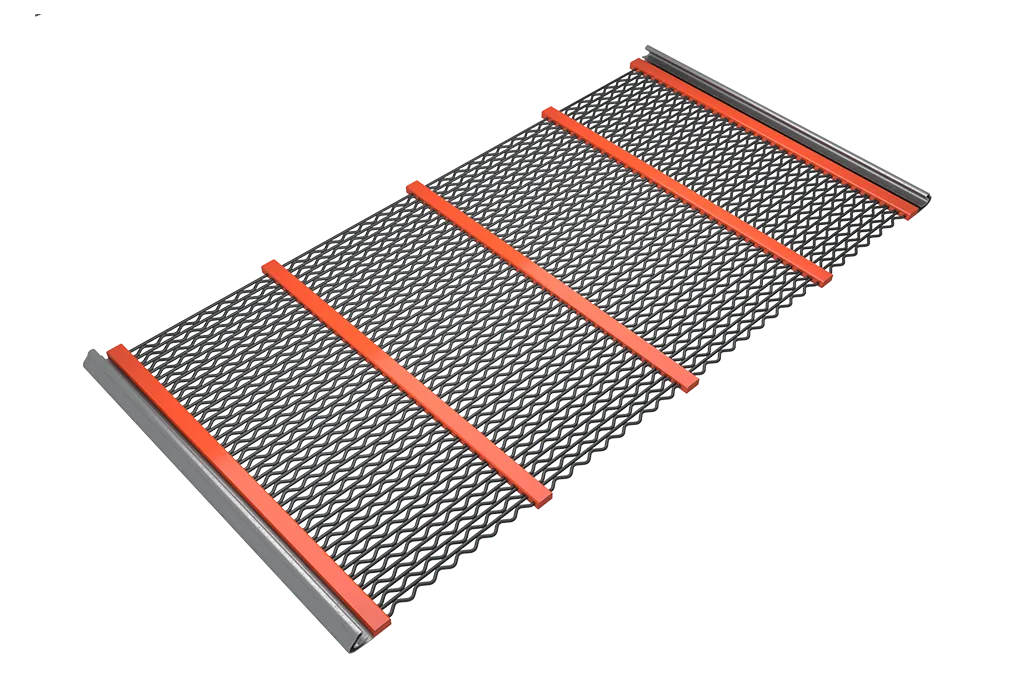
Traditional woven wire screens in quarrying environments operate as a rigid grid where the crossover points of the metal strands act as a foundation for damp particles to settle. This physical design allows for the accumulation of a "cake" layer that eventually seals the apertures, causing undersized material to carry over into the wrong stockpile.
A 2024 industrial survey of quarries in the Pacific Northwest found that blinding in static mesh leads to a 15% increase in fuel consumption per ton of final product. The extra weight of the trapped material forces the vibrating motors to draw more amperage to maintain the required stroke.
This buildup forces the plant to stop so that workers can manually scrape the deck, a process that usually requires 30 to 45 minutes of downtime per shift. These interruptions represent a significant loss in total tonnage, especially during the spring and autumn months when soil and rock moisture levels consistently exceed 8%.
| Operational Factor | Standard Woven Wire | Self-Cleaning Systems |
| Open Area Efficiency | 50% - 65% | 75% - 88% |
| Moisture Tolerance | Poor (<5%) | Excellent (Up to 15%) |
| Downtime per Month | 18 - 25 Hours | < 2 Hours |
| Bearing Temperature | Higher | 10-15°F Lower |
Switching to self-cleaning screens changes the mechanics of the deck by replacing the weave with flexible polyurethane or rubber strips. These strips allow each high-tensile wire to vibrate at its own frequency, which is typically 25% higher than the frequency of the screening machine itself.
Technical tests on a sample of 450 tons of damp basalt fines showed that independent wire oscillation snaps the capillary bond of water-saturated clay. This secondary vibration ensures that particles are tossed off the wire surface before they can solidify into a bridge across the opening.
Because the holes stay open, the material bed moves faster across the screen, allowing for a 20% increase in feed rate without sacrificing sizing accuracy. This flow prevents the "back-up" of material that often occurs when a screen deck starts to blind at the discharge end.
-
The removal of "dead zones" at wire intersections increases total screening area by 12-18%.
-
Ripple-style wires provide a vertical "bounce" that ejects stones trapped in the aperture.
-
Modular panel designs allow for the replacement of high-wear zones without discarding the entire deck.
By maintaining this throughput, the quarry avoids the necessity of running the plant for extra hours to meet daily quotas. In a 2025 pilot study, a site processing 300,000 tons annually saved over $28,000 in energy costs by reducing the time needed to process their inventory.
Analytical data from the study confirmed that the sizing accuracy for 1/4" minus product remained at 96%, whereas the control group using standard mesh saw accuracy drop to 58% during a 4-hour rain event. High accuracy prevents the contamination of coarse aggregates with excessive fines.
Keeping the deck clear of "dead weight" also protects the physical components of the vibrating screen. A blinded deck can hold up to 400kg of trapped material, which puts immense stress on the support springs and the side plates of the machine box.
Reducing this load allows the eccentric weights to achieve the desired G-force with less effort, resulting in a 12% reduction in bearing wear. Lower bearing stress translates to fewer emergency repairs and a longer lifespan for the synthetic lubricants used in the drive assembly.
A financial review of 10 different quarry sites in 2024 showed that the initial cost of self-cleaning media is recovered within 18 to 24 production days. This calculation is based on the increased yield of "clean" stone and the elimination of manual labor for screen maintenance.
The safety profile of the site also improves because operators no longer need to enter the screen box with high-pressure washers or scrapers. Statistics from the mining industry indicate that 20% of maintenance-related slips occur while cleaning screen decks, a risk that is virtually eliminated with a self-cleaning surface.
Modern self-cleaning wires are manufactured from high-carbon spring steel or stainless steel, ensuring they can handle the abrasion of crushed granite for over 3,000 hours. The lack of friction at the intersection points—unlike woven wire—prevents the wires from thinning and snapping prematurely.
Quarries that adopt this technology are better equipped to handle variable feed conditions, from bone-dry summer dust to saturated winter clay. This versatility ensures that the production schedule remains fixed, regardless of the moisture content of the incoming raw material.
The choice to use dynamic screening surfaces is a move toward a more predictable and profitable operation. By utilizing the physics of independent wire motion, a quarry can maximize its asset utilization and ensure every ton of material is processed at the lowest possible cost.
// NEXT MOVE
Stop eating pages at 2 AM. Let SteelRats absorb them.
Senior platform engineers embedded in your stack — Kubernetes, Terraform, observability, incident response. Fixed monthly retainer. No juniors. No surprises.