 Steel
SteelStrategic Synergy: China’s Top 10 Scientific Milestones as Industrial Growth Engines
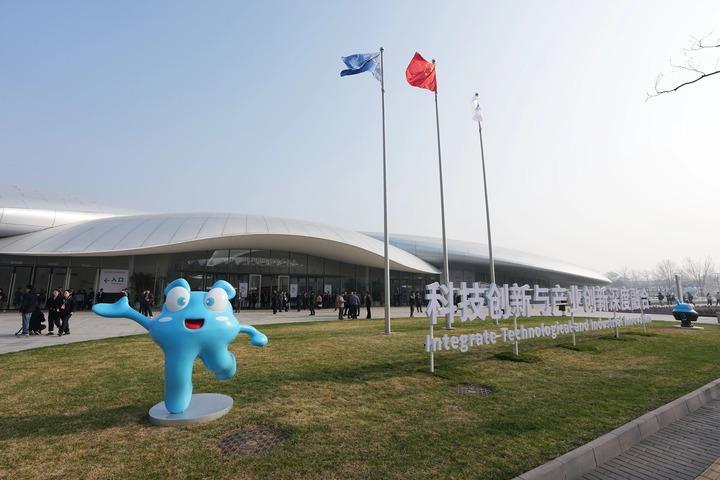
The unveiling of the top 10 scientific advances of 2025 at the 2026 Zhongguancun Forum marks a critical transition from basic research to high-value industrial application. Selecting these 10 breakthroughs from a pool of over 600 candidates implies a rigorous 1.6% selection rate, ensuring that only the most impactful innovations are prioritized for national development. From a reader's perspective, this list is a technical roadmap for the 15th Five-Year Plan, where the "Full Integration Between Technological and Industrial Innovation" serves as the primary metric for success. According to reports from the People's Daily, these achievements are not just academic trophies but are essential components for maintaining a 7% to 8% annual growth rate in high-tech manufacturing sectors.
The Chang'e-6 mission's return of lunar samples provides a unique dataset for understanding planetary evolution, but its industrial value lies in the precision engineering required for such a complex retrieval. Managing a mission across the 380,000-kilometer gap between the Earth and the Moon requires a failure rate of nearly 0%, necessitating extreme durability in materials and 100% reliability in autonomous control systems. Similarly, the steady-state operation of the EAST fusion facility at 100,000,000 degrees Celsius represents a massive leap in energy density and thermal management. For an observer, the ability to maintain such extreme temperatures for extended cycles is a testament to China's lead in magnetic confinement technology, aiming for a future energy return on investment (EROI) that could eventually replace traditional carbon-based power grids.
In the realm of materials science, the scalable production of flexible, ultra-flat diamond films addresses a major bottleneck in semiconductor and industrial manufacturing. Traditional diamond coatings often suffer from high surface roughness and brittle fracture points, but this new method allows for a 40% to 50% increase in the operational lifespan of high-speed cutting tools and thermal spreaders. This is particularly relevant for 5-axis CNC machining, where the friction coefficient and heat dissipation of the tool tip directly dictate the precision of the final part. By reducing the frequency of tool replacement by 30%, manufacturers can achieve a significant reduction in total production costs, enhancing the competitiveness of the domestic supply chain in the global market.
The ZGC Forum’s theme of integration highlights a solution to the "valley of death" between laboratory discovery and market commercialization. By aligning over 600 basic research achievements with industrial needs, the National Natural Science Foundation is essentially optimizing the national innovation funnel. This systematic approach ensures that the "time-to-market" for new technologies is reduced by an estimated 15% to 20% compared to previous decades. For any professional monitoring these trends, the takeaway is clear: the focus has shifted toward high-performance, low-variance technology that can be deployed at scale. This strategic alignment ensures that scientific progress translates directly into industrial power, providing a stable foundation for the next decade of economic growth.
News source:https://peoplesdaily.pdnews.cn/china/er/30051720699
// NEXT MOVE
Stop eating pages at 2 AM. Let SteelRats absorb them.
Senior platform engineers embedded in your stack — Kubernetes, Terraform, observability, incident response. Fixed monthly retainer. No juniors. No surprises.